


Theme-Based Christmas Ball Ornament Sets-How to Curate Collections That Sell
2026-07-22
Christmas ball ornament sets are easy to look at. A box. A few colors. Some shine. Done, right?
Well, not quite.
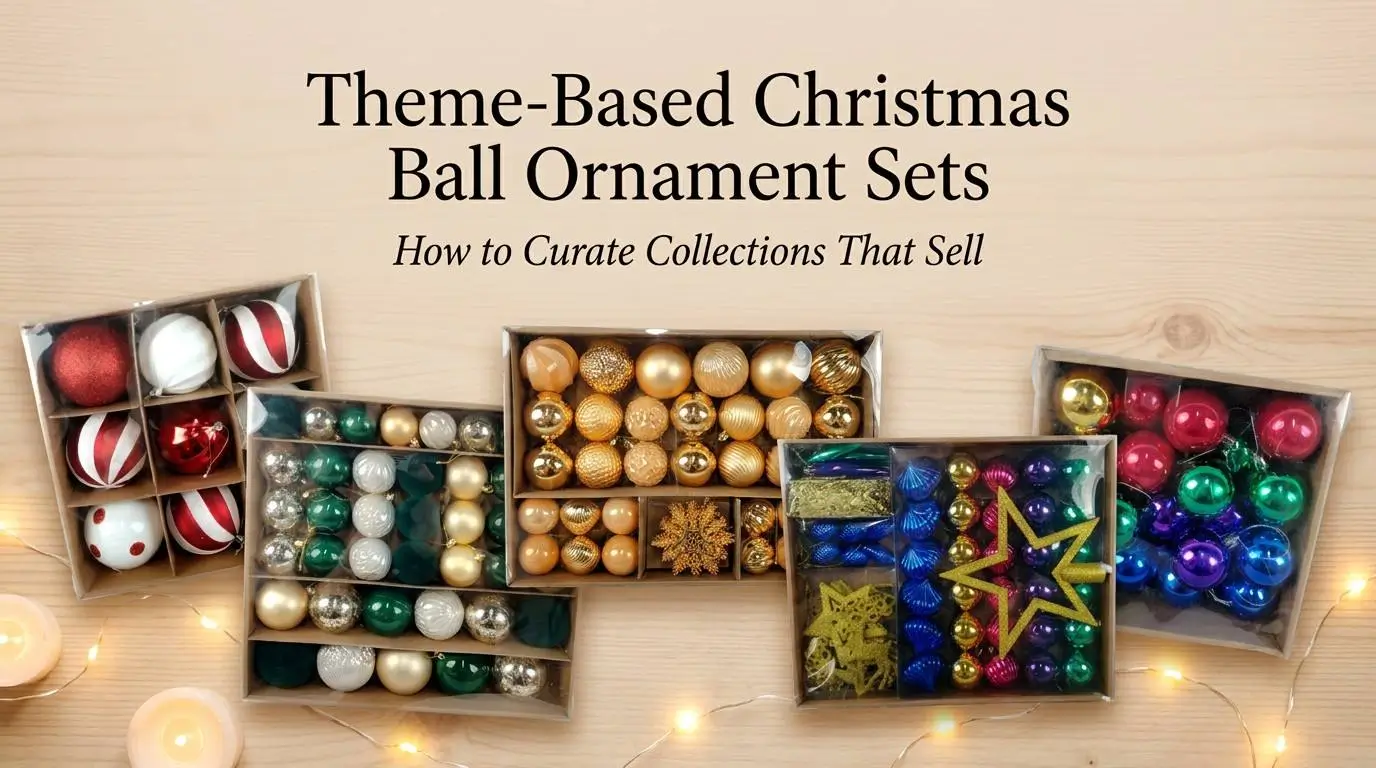
For buyers, theme-based Christmas ball ornament sets can shape shelf speed, page feel, and shopper effort. A strong set is not just a group of balls. It is a ready-made Christmas look.
That is why theme curation matters.
Here is the short version. A good ornament set gives the buyer a clear story, a useful finish mix, and a pack that feels complete.
It helps a chain retailer build a cleaner shelf wall. It helps an online seller take better photos.
It helps a project buyer decorate a lobby without chasing ten random stock items. It also helps distributors build a catalog that feels fresh and easy to sell.
You know what? Shoppers may not name the theme out loud. But they feel it.
Red and white feels sweet and family-friendly. Green, white, and champagne feels calm. All-gold feels premium. Bright multicolor feels bold.
That feeling is where the sale begins.
First, What Is A Theme-Based Ornament Set?
A themed set is a group of Christmas balls made to work as one. It may share a color story, a finish mix, a shape rhythm, or a clear scene idea.
Think of it like a table setting. One plate can look nice. But plates, glasses, napkins, and candles together tell the guest what kind of dinner it is. Ornament sets work the same way.
Most winning sets include four parts:
- A main color that sets the mood.
- A support color that gives balance.
- A finish mix, such as shiny, matte, glitter, pearlescent, ribbed, faceted, or metallic.
- A hero piece or special shape that makes the pack easy to remember.
Random color mixing can feel busy, even when each ball looks good alone. The set needs a reason to exist.
Why Do Theme-Based Christmas Ball Ornament Sets Sell Better?
Because they lower the buyer’s effort.
A shopper does not want to solve a design puzzle in the store aisle.
A hotel buyer does not want to guess whether champagne gold will work with dark green. A marketplace customer does not want to buy three listings and hope the colors match.
A set gives them a shortcut.
For B2B buyers, that shortcut turns into business value:
- Faster product selection for retail buyers.
- Better shelf and catalog stories for distributors.
- Less product-page confusion for e-commerce sellers.
- Cleaner decor plans for project contractors.
- Easier mood boards for design companies.
The key point is simple. Theme sells because theme saves time. In Christmas buying, time is a real cost.
Start With The Market, Not The Ornament
It is tempting to begin with the prettiest ball. We get it. A mirror gold ball under studio light can make anyone pause for a second.
But buyers should start with the sales channel first.
For chain retail, the set must read clearly from a few steps away. Strong color blocks matter. Packaging visibility matters. A customer has only a few seconds before looking at the next box.
For online sales, the set must look good in photos. Colors should stay clear on mobile screens.
Finish variety helps the main image look rich. Too much reflection can be tricky. Matte and glitter pieces often help soften the shot.
For project buyers, durability and visual volume matter. The set should help fill a tree, garland, arch, or large display fast.
If the decoration sits in a hotel, mall, airport, or event space, safety and repeat use also matter.
For import distributors, the set must sit inside a wider range. It needs a core theme, a volume-friendly price band, and a clear change from last season’s catalog.
See the pattern? The best sets do not start with “pretty.” They start with two plain questions. Who will buy this? Where will they use it?
The Four-Part Formula: Color, Finish, Size, Hero
Let’s make it practical.
1. Color Story: Let The Shopper Understand It Fast
A color story should be clear in one glance. Red and white. Green and champagne. Gold-on-gold. Jewel tones. Classic multicolor.
If a buyer needs a long explanation, the set may be too muddy.
Keep the main color clear. Add one or two support colors. Then stop.
A theme can still feel rich without trying to cover the whole holiday aisle.
2. Finish Mix: Add Texture Without Making Noise
Finish is where a set gets depth.
Shiny balls catch light. Matte balls calm the layout. Glitter adds a festive flash.
Ribbed and faceted surfaces bring texture. Metallic pieces make the set feel richer. Pearl white can make a set feel softer and more giftable.
The trick is balance. Too many shiny balls can look flat in photos because they reflect the same light.
Too much glitter can feel messy for a premium line. A 40/30/20/10 mix often works well.
Use 40 percent core finish, 30 percent shine, 20 percent texture, and 10 percent hero detail.
That is not a strict rule. It is a useful starting point.
3. Size Rhythm: Small, Medium, And Feature Pieces
Size changes how a set works on a tree or display.
Small balls fill gaps. Medium balls build the main look. Larger balls create focus. Special shapes, such as stars or snowflakes, act like punctuation.
For small retail packs, buyers often want a neat, simple structure. For large displays, the set may need more size variety so the design does not look thin from a distance.
4. Hero Piece: Give The Set A Memory Hook
Every good collection needs one small surprise. It can be a glitter star, a snowflake, a candy stripe, a faceted emerald ball, or a gold ribbed finish.
This hero detail gives the set a name, a photo angle, and a stronger shelf story. It also helps sales teams talk about the item without sounding vague.
Five Theme Ideas Buyers Can Use Right Away
Below are five theme directions based on the product images. Each one can serve a different buyer group and price band.
1. Red And White Candy Classic: Sweet, Clear, Easy To Sell
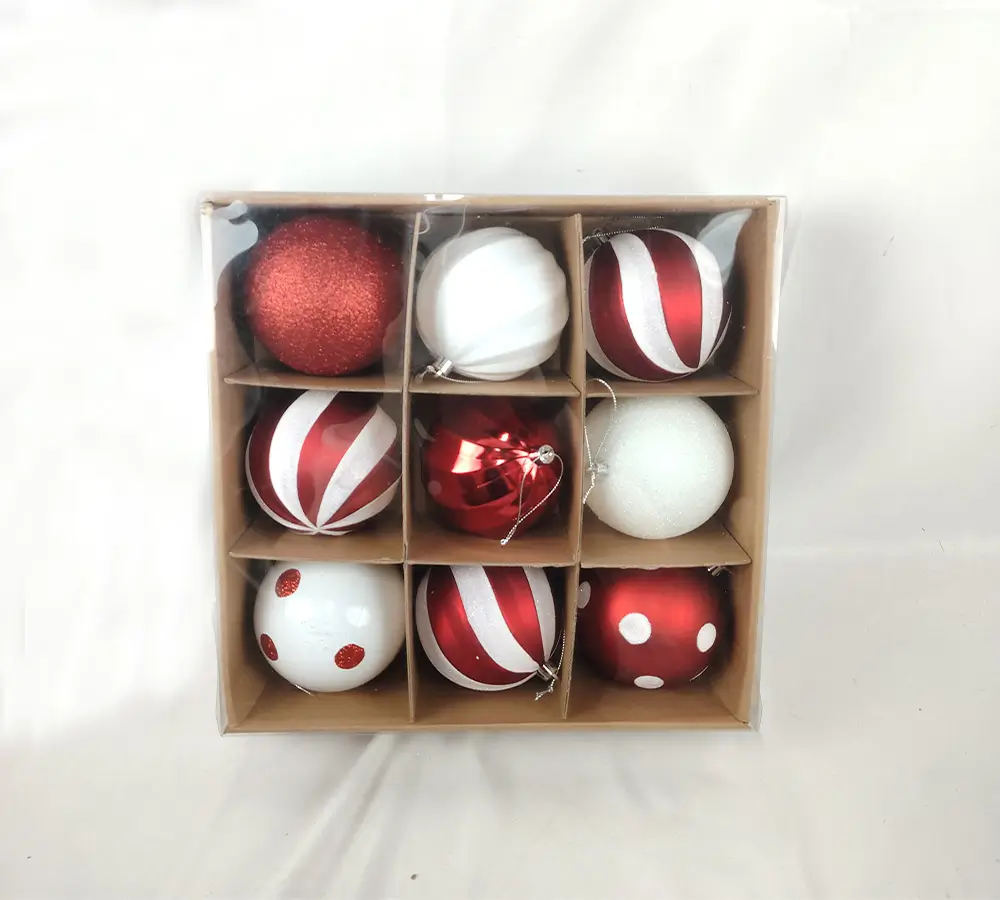
Caption: A red and white set gives shoppers a fast festive cue. The stripe and dot pieces make the pack feel playful without losing order.
Red and white is one of the safest Christmas themes for retail. It feels warm, familiar, and easy to place in a home display.
It also works well for gift sections. The color story is clear.
This kind of set is strong for:
- Supermarket and chain retail seasonal aisles.
- E-commerce listings aimed at family Christmas decor.
- Gift-ready ornament packs.
- Entry and mid-price collections.
The finish mix matters here. Red shiny pieces add shine. White glitter pieces add a snowy feel.
Candy stripes make the set more charming. A few dot patterns stop the pack from looking too plain.
Would every market want this as the premium line? Maybe not. But as a high-volume item, it earns its space.
2. Evergreen Champagne: Calm, Modern, And Very Giftable
Caption: Green, champagne, white, and metallic finishes create a balanced set for modern homes, boutiques, and catalog programs.
Green and champagne has a softer feel than classic red and green. It still says Christmas, but in a calmer voice.
This theme works well for buyers who serve:
- Home decor stores.
- Department stores.
- Online shops with neutral or modern product photos.
- Design companies building natural holiday scenes.
- Boutique retail programs.
The white pieces keep the set bright. Champagne gold adds warmth. Deep green anchors the look. Speckled silver finishes add a more collected feel.
Here is the part buyers remember. This theme looks good in daylight and warm indoor light. That matters for product photos, showroom displays, and real homes.
3. Luxury Gold: Premium Without Needing Many Colors
Caption: An all-gold set can feel rich when it uses varied textures, sizes, and one hero snowflake detail.
Gold is not just one color. It can be champagne, mirror gold, brushed gold, warm gold, and pale pearl gold. When these tones work together, the set feels layered instead of flat.
This is a strong direction for:
- Premium retail lines.
- Hotel and lobby decoration.
- Commercial Christmas trees.
- Gift packaging programs.
- Brand window displays.
The image shows why texture matters. Ribbed pieces, faceted balls, smooth mirror balls, matte-style surfaces, and a central snowflake all live in one family. The result feels rich but still controlled.
Let’s be honest. All-gold can go wrong fast if every ball has the same finish.
It may look like a box of coins. The fix is simple. Mix surfaces and add one sculptural feature.
4. Jewel-Tone Party: Bold Color For Stores That Want Drama
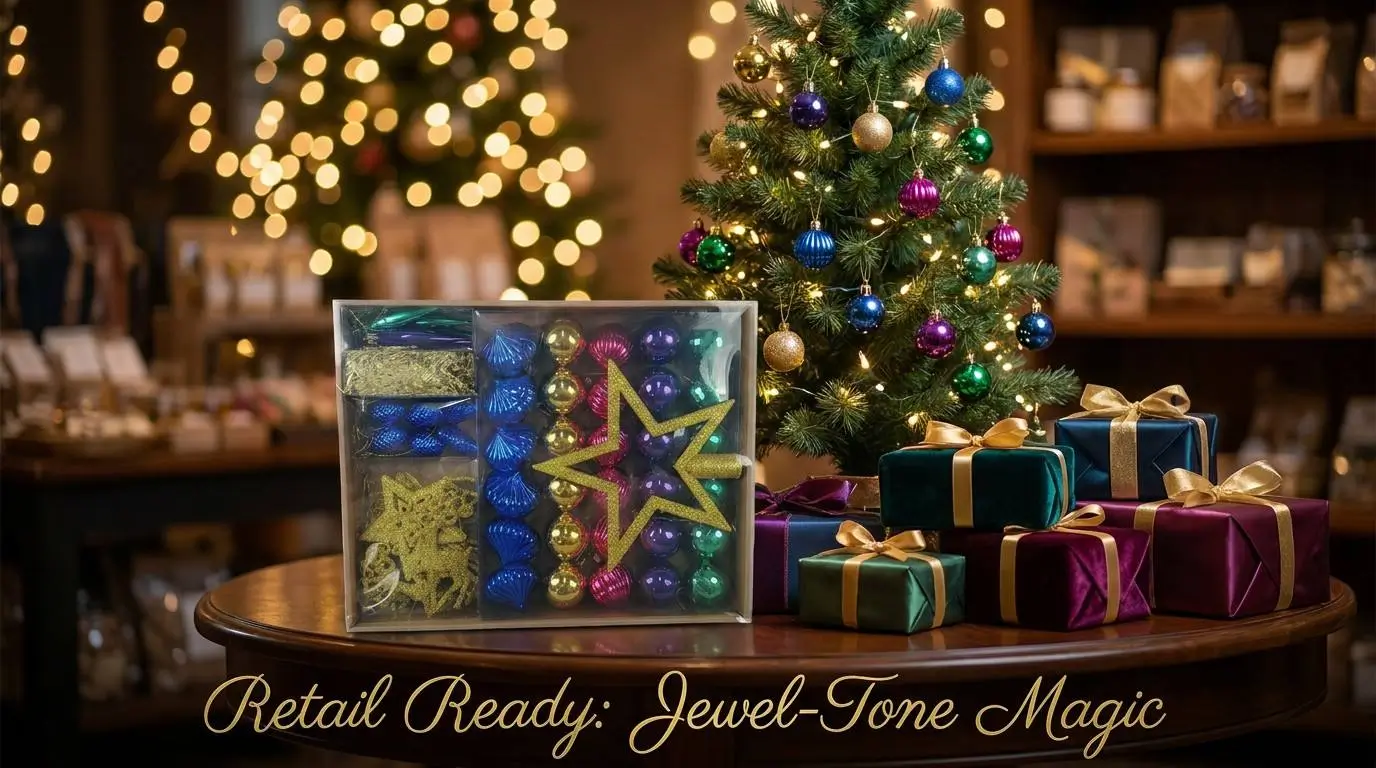
Caption: Jewel tones bring strong visual energy. The gold star gives the set a focal point for photos and shelf display.
Some markets want quiet Christmas. Others want color with volume turned up.
Jewel-tone sets can help retailers stand out. The colors look strong in photos and across a shelf wall.
Blue, pink, purple, green, and gold create a festive party mood. The star piece adds a bold focus.
This theme suits:
- Trend-led retail programs.
- Social media-friendly e-commerce listings.
- Party decor and event supply channels.
- Youthful gift sections.
- Display projects that need high color impact.
The risk? Too many colors can feel messy. The fix is to repeat shapes and finishes. In the pictured set, glossy balls and metallic pieces help hold the story together.
5. Classic Bright Mix: The Big Holiday Feeling
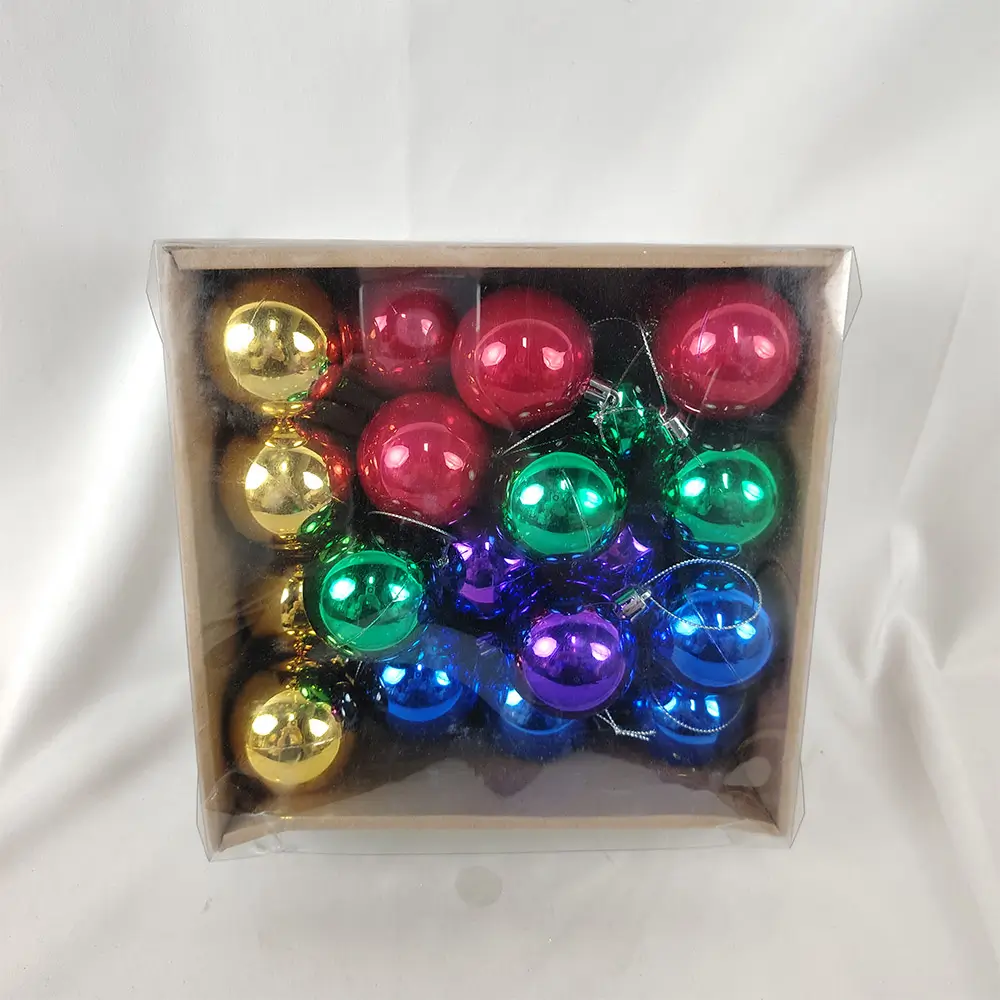
Caption: A bright multicolor set is useful for bulk sales, family decor, and entry-level seasonal programs.
There is still a large market for classic bright Christmas colors. Red, green, gold, blue, and purple may not be minimal.
That is the point. These colors give the set its cheerful, high-energy look.
They are cheerful. They read well from far away. They fill a tree fast. And for many buyers, that is the whole job.
Classic bright sets work for:
- Mass retail.
- Value packs.
- Online bundles.
- School, office, and community decor.
- Large seasonal resale programs.
If the target shopper wants a full tree look in one box, this theme is a smart move. The buyer does not need to build a palette. The pack does the work.
How To Build A Theme Set Buyers Can Sell With Confidence
A pretty set can get attention. A well-built set gets repeat orders.
Use this checklist before final sampling:
- Can your team name the theme in three words or less?
- Does the pack have one clear main color?
- Are there at least two finish types?
- Does the product photo look good on mobile?
- Does the pack suit the target price band?
- Can the set match tree skirts, wreaths, ribbons, or garlands?
- Will the packaging protect the surface finish during shipment?
- Can the factory repeat the color and finish in bulk?
That last point is where real buying starts. A sample can look great.
Bulk goods must keep the same color feel across cartons. For chain retail and distributors, color control is not a detail. It is trust.
The Box Is Part Of The Theme
Packaging does more than hold ornaments. The box frames the story.
Clear window boxes let the shopper see the color story at once. Trays protect surface finishes and make the pack look neat.
Kraft-style inner dividers can give a warm, natural look. Printed sleeves can add brand value, gift feeling, and shelf identity.
For online sellers, the box also has another job: it must survive delivery.
Shiny and glitter surfaces should not rub against each other too much. Dividers help. A clear layout also reduces the chance that a shopper thinks pieces are missing.
For retailers, the pack must scan fast. If the customer cannot see the theme, the pack loses one of its strongest selling points.
Match The Set To The Buyer Type
Different buyers need different answers. Here is a practical way to sort the same product idea.
For import distributors, build a range with three layers: safe classics, modern color stories, and one bold seasonal line. This gives sales teams something stable and something new.
For chain retailers, focus on shelf story and price ladder. Use entry packs for volume. Use mid-level sets for design value. Use premium sets for display zones.
For e-commerce sellers, choose themes that photograph well. Avoid color mixes that look dull on mobile. Add finish variety so the main image has depth.
For project contractors, think in scenes. A hotel tree, mall arch, restaurant ceiling, and office lobby all need different visual volume. Safety, storage, and repeat use matter here.
For design companies, give them color families they can place into mood boards. They need themes that match ribbons, floral picks, garlands, lights, and larger focal ornaments.
One product type. Many buying reasons. That is why a factory with custom color, finish, and packaging support can help buyers build stronger collections.
Custom Theme Sets: When Standard Packs Are Not Enough
Standard Christmas ball ornament sets are useful. But custom theme sets can give a buyer a sharper market position.
A custom set may include:
- Pantone color matching.
- Shiny, matte, glitter, metallic, pearlescent, ribbed, or faceted finishes.
- Mixed sizes within one pack.
- Special shapes such as stars, snowflakes, finials, or drops.
- Private label packaging.
- Retail display-ready box design.
- Custom carton packing for export shipments.
The goal is not to make the set complicated. The goal is to make it easy to buy and hard to confuse with a generic item.
For example, a retailer may request a “champagne forest” set with dark green, soft gold, pearl white, and speckled metallic balls.
A project buyer may ask for a gold set with larger pieces for a lobby tree. An online seller may want a photo-friendly red and white set with more pattern pieces.
A few small changes help the product fit the channel.
Where Senmasine Fits In The Sourcing Plan
Senmasine is a source factory manufacturer with more than 20 years of experience in Christmas decoration production. For buyers, that matters because theme sets depend on more than a nice sample photo.
They need repeat color. They need stable finish quality. They need packaging that supports retail or shipping.
They also need a supplier who understands how buyers will sell, display, pack, and reorder each set.
Senmasine helps buyers develop Christmas ball ornament sets with clear color plans, finish plans, and OEM / ODM ideas.
The team can also guide box plans for wholesale or project use. This factory experience helps buyers build a full seasonal range, not just buy one box.
Planning themed Christmas ornaments wholesale for your next retail season?
Review Senmasine’s Christmas ball ornament collection. You can also send your target theme through the Senmasine contact page.
A clear theme brief can speed up sampling and make the quote more accurate.
A Simple Way To Brief A Factory
A strong buyer brief does not need to be long. It needs to be clear.
Share these points:
- Target market and channel.
- Pack count and target price range.
- Main color story.
- Finish mix.
- Size range.
- Box style.
- Safety or compliance needs.
- Expected order season.
- Reference images or mood board.
That is enough to start a useful conversation.
And here is a small tip. Name the collection before sampling.
Names like “Candy Red,” “Evergreen Champagne,” “Golden Lobby,” or “Jewel Party” help the team judge whether each sample fits the story.
It sounds simple because it is. Simple often works.
Final Thought: A Set Should Feel Like A Finished Look
Theme-based Christmas ball ornament sets sell when they make the buyer’s next step easy.
The set should feel finished. The colors should make sense. The finishes should help each other. The box should show the story before anyone opens it.
That is the real power of curation.
A shopper buys the mood. A retailer buys the sell-through. A distributor buys the range. A project buyer buys time saved on site.
When one ornament set can answer all of that, it is no longer just a box of balls.
It is a product story ready for the season.
Previous article
Plastic vs Glass vs Foam vs Velvet Christmas Ball Ornaments: The Ultimate ComparisonNext article